
SHAPE
South Stratford Housing & Planning for Everyone
Evidence
Alternative Sites
The South Warwickshire Local Plan considered a number of strategic development options before selecting its preferred allocations. This page summarises SHAPE's review of whether the Council's published evidence applied a consistent assessment methodology when comparing preferred allocations with the reasonable alternatives.
At a glance
National planning policy does not require every reasonable alternative site to be allocated. However, Local Plans should demonstrate that the preferred strategy has been selected through a proportionate, transparent and evidence-based assessment of the reasonable alternatives.
Our review does not argue that any rejected site should necessarily have been allocated instead. Rather, it examines whether comparable planning characteristics—including transport, rail accessibility, settlement form, landscape, infrastructure delivery and recreational value—have been assessed consistently across both preferred and rejected strategic options.
1. Were transport infrastructure requirements assessed consistently?
One of the clearest themes within the Council's published evidence is the importance of transport infrastructure when selecting strategic development locations. Throughout the site selection process, both preferred allocations and rejected alternatives were assessed against their ability to accommodate significant housing growth whilst managing impacts on the surrounding highway network.
Several rejected strategic alternatives—including Danzey, Kingswood and Bearley & Wilmcote— were found to require substantial highway intervention. The published evidence identifies issues including major junction improvements, new road links, upgrades to the rural highway network and, in the case of Kingswood, the potential need for an entirely new M40 junction.
However, the Council's preferred allocations also depend upon major transport infrastructure. Long Marston Airfield (LMA) relies upon delivery of the South Western Relief Road (SWRR), STR.2 is expected to contribute towards funding that same road while benefiting from its delivery, and Bidford (BID.1) depends upon construction of a new River Avon crossing.
What does STR.2 mean for the cost of the Relief Road?
STR.2 is closely linked to the proposed South Western Relief Road. But with the road potentially costing hundreds of millions of pounds, how would it actually be funded — and who ultimately carries the financial risk?
Read: Bridges & Loans →The issue identified by our review is therefore not whether significant transport infrastructure is required—both preferred and rejected sites require it. Rather, it is whether similar infrastructure dependencies were assessed using a consistent deliverability test.
Key finding
The published evidence appears to apply different deliverability assumptions to preferred and rejected strategic options. Infrastructure uncertainty contributes to rejection in some cases, while comparable infrastructure dependencies are assumed capable of delivery where they support the preferred strategy.
In other words, the question is not whether infrastructure is needed—it is whether similar transport constraints have been treated consistently when comparing reasonable alternatives.
Potential NPPF concerns
Paragraph 36(c) – Effective
Local Plans should be supported by infrastructure that can realistically be delivered throughout the plan period. Where comparable infrastructure requirements have been treated differently, the evidence should explain why.
Paragraph 36(b) – Justified
A Local Plan should represent the most appropriate strategy when considered against the reasonable alternatives. The published evidence should therefore demonstrate that a consistent methodology has been applied when assessing infrastructure deliverability across all strategic options.
2. Were existing rail connections given sufficient weight?
National planning policy places significant emphasis on locating new development where sustainable transport choices already exist. Access to operational railway stations, established walking and cycling routes and existing public transport infrastructure can reduce reliance on private vehicles whilst supporting lower-carbon patterns of travel.
Several rejected strategic alternatives benefit from these characteristics. Bearley & Wilmcote, Danzey and Kingswood all have existing railway stations on the Birmingham–Stratford line, together with established active travel links connecting surrounding communities.
By comparison, several of the Council's preferred allocations rely far more heavily upon future transport improvements. Long Marston Airfield depends on enhanced bus services and strategic highway investment, while STR.2 is expected to achieve ambitious levels of walking, cycling and public transport use through future infrastructure and behavioural change.
Our review therefore considers whether sufficient weight was given to existing sustainable transport assets when comparing reasonable alternatives, particularly where preferred allocations rely on future mitigation to achieve similar outcomes.
Key finding
Several rejected alternatives benefit from existing railway stations and established sustainable transport infrastructure. It is not clear from the published evidence how these existing advantages were comparatively weighed against preferred allocations that rely upon future transport improvements to achieve similar sustainability objectives.
The question raised by our review is not whether future transport improvements can be delivered. Rather, it is whether existing sustainable transport assets were consistently valued when comparing the reasonable alternatives available to the Council.
Potential NPPF concerns
Paragraph 114 – Promoting sustainable transport
Planning should maximise opportunities for sustainable transport by making the fullest possible use of existing walking, cycling and public transport infrastructure where it is available.
Paragraph 36(b) – Justified
A sound Local Plan should explain how the comparative sustainability benefits of different strategic locations have been assessed. Where rejected alternatives possess existing transport advantages, the evidence should clearly demonstrate how these were weighed against preferred allocations that depend upon future mitigation.
New national policy strengthens the case for station-led development
This issue has taken on particular significance following the Government's announcement on 17 August 2026 of changes to the National Planning Policy Framework. The Government states that the revised framework will introduce a default "yes" for homes within reasonable walking distance of well-connected railway, tram and underground stations, alongside minimum expectations for housing delivery in these locations.
The Government also states that planning decisions should give proper consideration to the proximity of public transport links, with development around well-connected stations identified as a means of creating more sustainable and well-connected places.
This makes the treatment of existing railway infrastructure particularly relevant when assessing strategic alternatives. Locations such as Bearley & Wilmcote, Danzey and Kingswood already benefit from operational railway stations, rather than relying entirely on future transport investment to establish sustainable travel patterns.
Read the Government's announcement on homes near stations →GOV.UK, 17 August 2026: "Full steam ahead to fast-track more homes near stations".
3. Were settlement form and landscape assessed consistently?
The Council's published evidence considered how each strategic option would relate to existing settlements, the wider landscape and the character of Stratford-upon-Avon. These considerations formed an important part of the site selection process, with factors such as settlement coalescence, landscape sensitivity and the relationship between new development and existing communities influencing planning conclusions.
One of the clearest examples is Bearley & Wilmcote, which was rejected partly because development would function as an extension to Stratford-upon-Avon and because of concerns regarding landscape impact and settlement form.
However, the preferred allocation STR.2 is itself proposed as a major urban extension to Stratford-upon-Avon. The Council's own evidence also acknowledges landscape constraints across parts of the site, together with the need for extensive green infrastructure and landscape mitigation.
Our review therefore considers whether similar settlement characteristics were assessed consistently across preferred and rejected strategic alternatives, and whether comparable landscape issues resulted in different planning conclusions.
Key finding
The published evidence appears to apply different planning conclusions to comparable settlement and landscape characteristics. Urban extension, landscape sensitivity and settlement relationship contribute to the rejection of one strategic option, while similar characteristics are accepted and mitigated within the preferred allocation.
Our review does not suggest that urban extensions should never be allocated. Rather, it asks whether comparable characteristics were assessed using a consistent methodology when comparing the reasonable alternatives available to the Council.
Potential NPPF concerns
Paragraph 180 – Conserving and enhancing the natural environment
Planning decisions should recognise the intrinsic character and beauty of the countryside and ensure landscape considerations are appropriately assessed.
Paragraph 36(b) – Justified
The preferred strategy should represent the most appropriate option when considered against the reasonable alternatives. Where comparable settlement and landscape characteristics have resulted in different planning conclusions, the supporting evidence should clearly explain why.
4. Were future infrastructure assumptions applied consistently?
Strategic developments are expected to deliver new infrastructure over time. Schools, healthcare facilities, community buildings, open space, sports provision and local centres are often delivered alongside new housing through comprehensive masterplanning rather than existing from the outset.
The Council's preferred allocations—including STR.2 and Long Marston Airfield—are assessed on this basis. Although surrounding infrastructure is currently under pressure, the published evidence concludes that future schools, healthcare provision, community facilities and green infrastructure can be planned and delivered as part of strategic development.
Our review considers whether the same assumptions were consistently applied when assessing rejected strategic alternatives. If future infrastructure delivery can mitigate existing deficiencies for preferred allocations, it is reasonable to ask whether comparable opportunities were fully explored for other strategic sites before they were discounted.
The issue is therefore not whether every site can immediately support major growth. Rather, it is whether the potential to deliver future infrastructure through comprehensive development was assessed consistently across all reasonable alternatives.
Key finding
The published evidence assumes that preferred allocations can overcome existing infrastructure constraints through future strategic investment and comprehensive masterplanning. It is less clear whether equivalent assumptions were consistently applied when assessing rejected strategic alternatives.
Our review does not suggest that future infrastructure should be ignored. Instead, it asks whether comparable assumptions about future delivery were applied consistently when comparing all reasonable strategic options.
Potential NPPF concerns
Paragraph 36(b) – Justified
The evidence supporting the preferred strategy should demonstrate that comparable assumptions have been applied when assessing reasonable alternatives.
Paragraph 36(c) – Effective
Strategic infrastructure should be capable of delivery during the plan period, and the assumptions underpinning infrastructure delivery should be applied consistently across all strategic options.
5. Has the existing recreational value of STR.2 been fully assessed?
The Council's vision for STR.2 includes significant new green infrastructure, public open space, walking and cycling routes, sports provision and areas designed to support biodiversity and community wellbeing. These proposals form an important part of the justification for the preferred allocation.

However, our review considers a different question. Before existing countryside is replaced with new green infrastructure, has the current recreational and community value of that land been adequately understood? National planning policy encourages planning decisions to recognise the health, social and environmental benefits that existing open spaces already provide.

STR.2 is crossed by a network of Public Rights of Way and informal walking routes which already connect neighbouring communities. The Council's evidence recognises these routes and proposes that they will be retained and incorporated into future green infrastructure. However, our review did not identify published visitor surveys, recreational use studies, natural capital assessments or social value assessments establishing how the land is currently used before redevelopment.
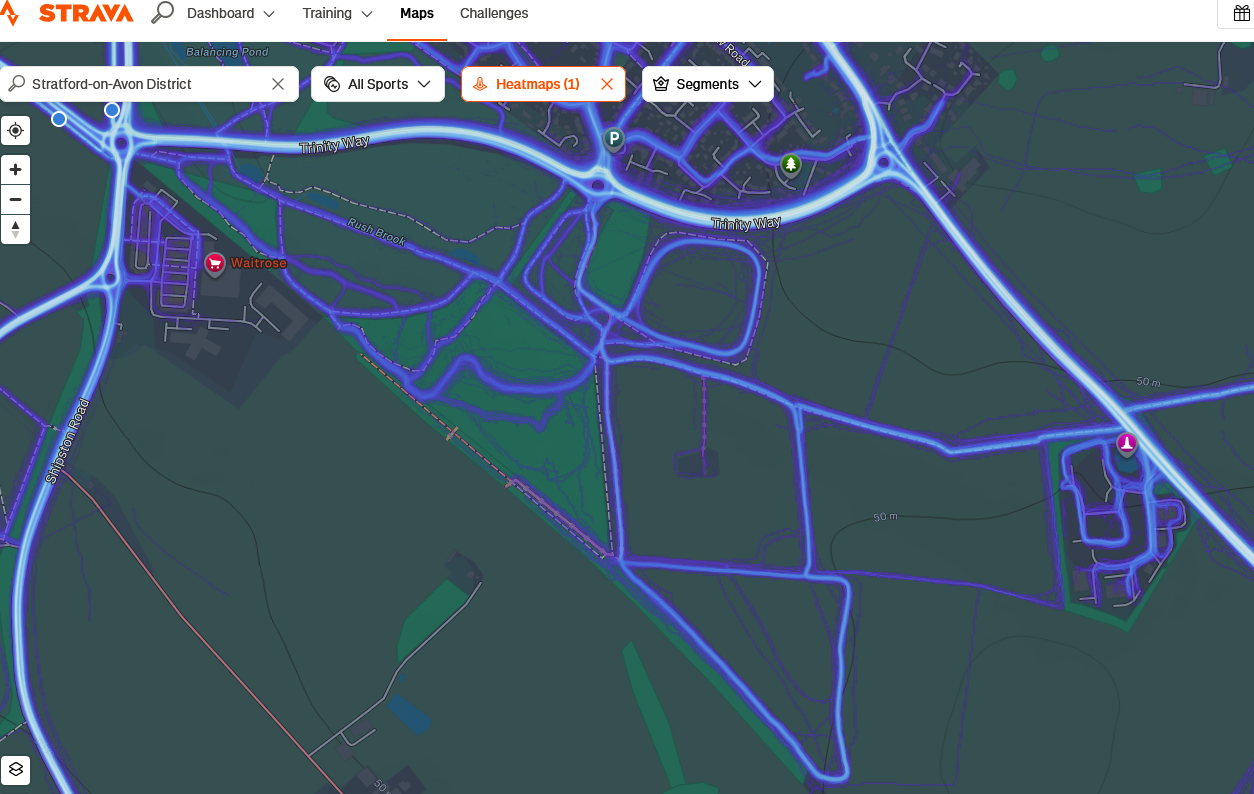
This distinction is important. New green infrastructure may provide substantial future benefits, but understanding whether it represents a net gain requires an evidence-based assessment of the existing baseline against which those benefits can be compared.
Key finding
The published evidence proposes substantial replacement green infrastructure but does not appear to establish the existing recreational and community baseline against which those future benefits can be evaluated. Without understanding the current value of the land, it is difficult to determine whether the proposed mitigation represents an overall gain.
Our review does not suggest that new parks or green infrastructure cannot deliver significant benefits. Rather, it asks whether the existing recreational, social and wellbeing value of the site has first been assessed using proportionate supporting evidence.
Potential NPPF concerns
Paragraph 96 – Promoting healthy and safe communities
Planning policies should recognise and support opportunities for recreation, healthy lifestyles and access to high-quality open space. Understanding the value of existing recreational assets helps inform balanced planning decisions.
Paragraph 36(b) – Justified
The preferred strategy should be supported by proportionate evidence. Where significant changes to recreational land are proposed, the supporting evidence should demonstrate that the existing baseline has been adequately understood before replacement benefits are assessed.
Would you like to add this evidence to your Regulation 19 submission?
We've prepared a PDF version of this page that you can download and include with your Regulation 19 submission.
Download this page as a PDFRead the full technical review
This page summarises the principal findings from SHAPE's review of the Council's alternative site assessment. The full report contains detailed planning policy analysis, references to the Sustainability Appraisal, Strategic Site Selection Rationale and other supporting evidence forming part of the South Warwickshire Local Plan evidence base.
Download the full report (PDF)